The Coldest Place on Earth
I'm shivering just thinking about it.
Howdy! It’s Joey, back with more Fun Fact Friyay. Bundle up for this fact, we’re getting a little chilly!
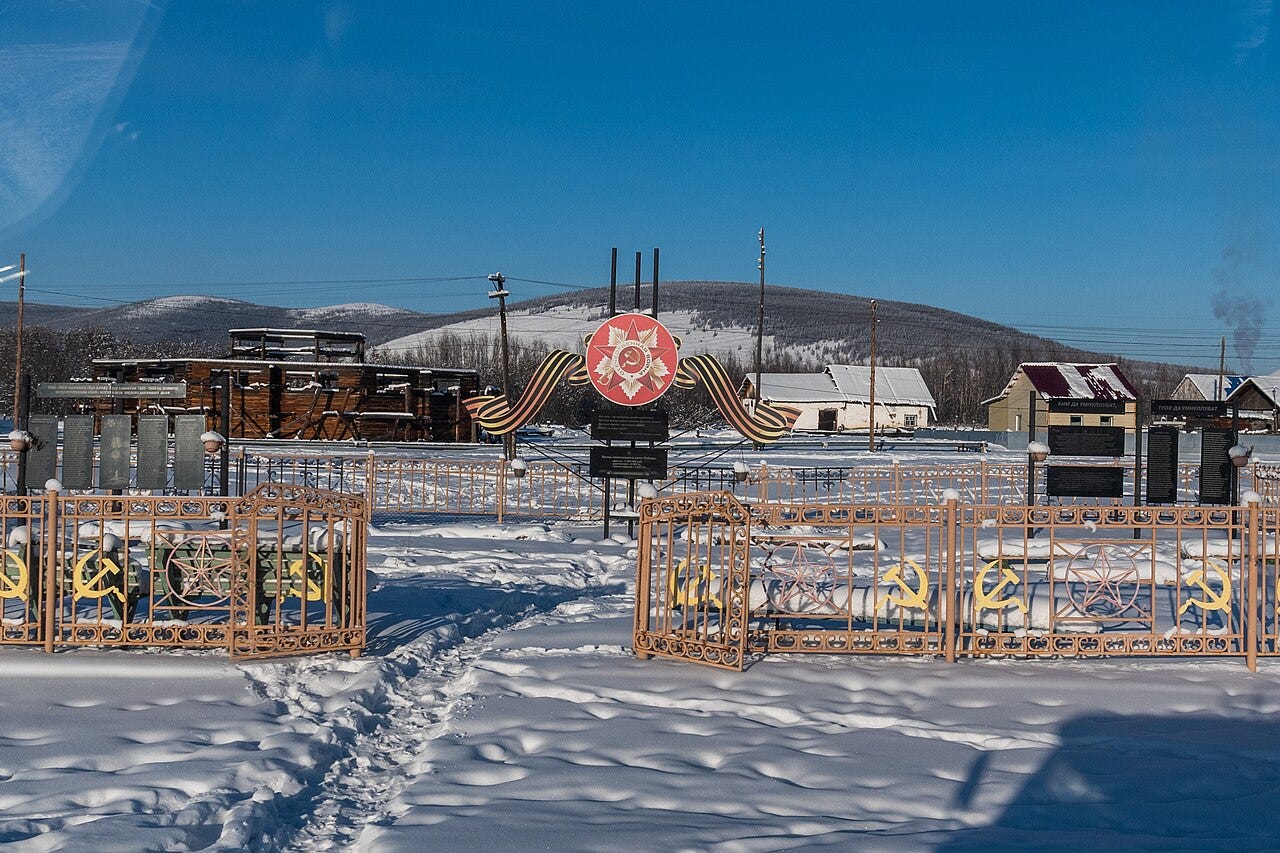
The coldest temperature for an inhabited place is in Oymyakon in the Sakha Republic, Russia. Daily mean temperatures are −45.7°C (−50.3°F), with a record low temperature of −67.7 °C (−89.9 °F) on February 6, 1933.
If you grew up somewhere with inclement weather, you may have hoped for the occasional snow day. After all, when lots of the fluff builds up around the school, it makes it so much more difficult to go inside, and twice as difficult to learn.
Despite snow being a regular occurrence during my childhood winters, I only recall school being closed one time due to weather. The low temperatures had led to some frozen infrastructure, and the school was without power.
I walked up to a handwritten sign on the school’s front door that informed us of the closure. Thankfully, my mom was still waiting for me in the car. Perhaps that very day is when I learned the lesson to always make sure your friend gets inside their house safely when you drop them off.
Despite what felt like very frigid weather at the time, it was nowhere near what Oymyakon experiences for much of the year. That’s because this rural locality in Russia’s Sakha Republic is the coldest permanently inhabited human settlement on Earth.
Oymyakon is along the Indigirka River and is also flanked by multiple mountains, so cold air is just whipping through the place.
There are a few theories as to the origin of its name; my favorite is that Oymyakon comes from the Even word “kheium,” meaning an “unfrozen patch of water.” In a place where everything freezes.
Condé Nast Traveler did a deep (freeze) dive written by Ken Jennings (yes, of “Jeopardy” fame) on Oymyakon back in 2018. This paragraph sums up the vibes pretty nicely:
“Pipes freeze, so most restrooms are plumbing-less outhouses. The ground freezes and few crops grow, so the local diet is mostly meat and fish, sometimes eaten frozen. Engines freeze so quickly that many cars are kept running all the time. Your eyelashes and saliva will freeze into painful little needles on your face as you walk down the street. Even vodka will freeze if a bottle is left outside.”
While Oymyakon is frigid for many months of the year—the settlement has never recorded a temperature above freezing from October 26 through March 16—it can get toasty during the summer.
Oymyakon’s record high hit 34.6 °C (94.3 °F) on July 28, 2010. The median temperatures of most summer days are a reasonable 10 to 15 °C, or 50 to 60 °F.
In fact, Jennings noted that over a two-week span, Oymyakon flipped from −88° F to 17 °F. That’s quite the swing in half a month!
So, as cold fronts hit this weekend and beyond, make sure to bundle up. And if you do find yourself frozen outside, you’ll at least have some stylish eyelashes.


