

Howdy! It’s Joey, back with more Fun Fact Friyay. Today’s fact is going swimmingly.
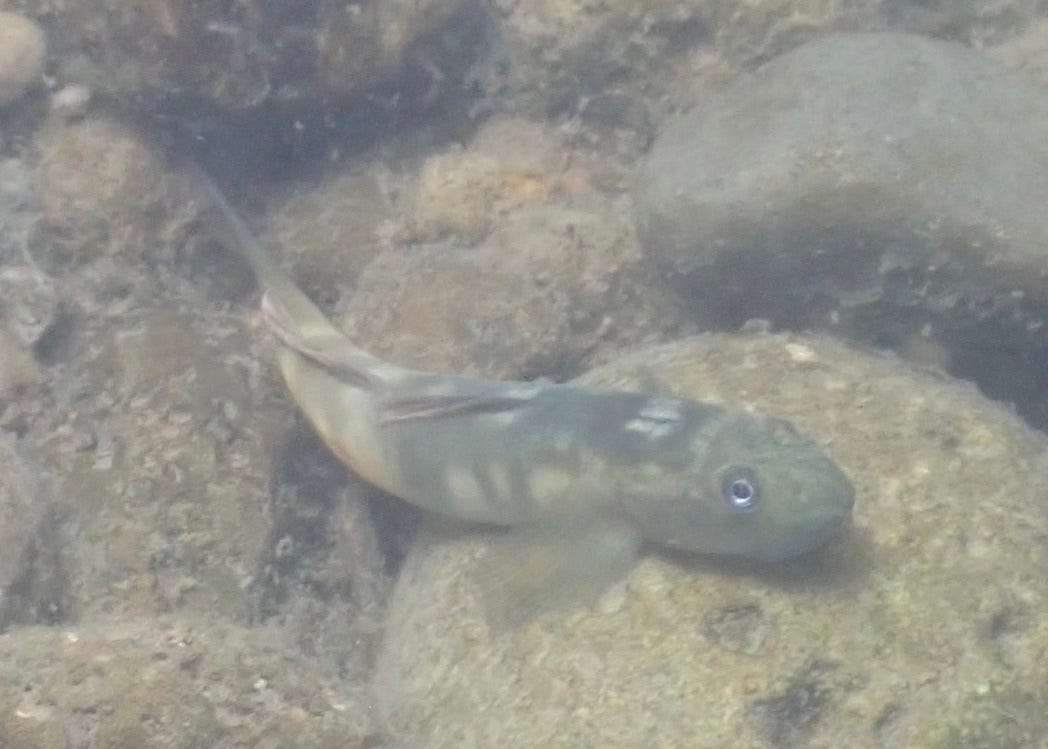
The ‘o’opu ‘alamo’o, a fish in Hawaii, can climb vertical waterfalls.
I visited the island of Maui last month, and it is very hard to believe that Hawaii is the same planet that you and I live (unless you live in Hawaii, in which case, it’s quite easy to comprehend).
Seemingly everywhere I turned, I would find myself marveling at how gorgeous the nature was around me. How clear the ocean water is. How cool the eucalyptus rainbow trees are. How lush the greenery gets.
Plus, you get to see things like the Nakalele Blowhole, which instantly locked in a spot as one of my favorite natural wonders. The waves from the ocean crash against the rocks alongside a cliff on the northwest coast of Maui, and some of that water gets forced through a large hole on the surface of the rocks.
When the tide is high, you get super cool sights like this:
Have you ever seen a rainbow traveling across the sky like that? What a spectacular view.
It turns out that rainbows are not the only thing that soar to impressive heights in Hawaii. The ‘o’opu ‘alamo’o (Lentipes concolor), a native fish, can climb up waterfalls.
There are four types of fish, including Stimpson’s goby, that can also scale waterfalls, though the ‘o’opu ‘alamo’o is the most impressive of the bunch.
When the fish return to their spawning beds and swim upstream, they sometimes come across waterfalls. It rains quite often on Hawaii, after all.
By using a combination of their mouths and suction disks on their pelvic fins, the fish can propel their way up the wet rocks behind and to the side of waterfalls.
Sometimes, these waterfalls can run hundreds of meters tall. That’s a whole lotta climbing! But it doesn’t deter the ‘o’opu one bit.
Surprisingly, the biggest threat to these fish when they’re climbing the waterfall isn’t that they’re breathing out of water. That’s mostly okay, as long as their gills and skin are wet.
Rather, the fish also need to be able to “pee across their gills” to properly remove nitrogenous waste. Without that, they’re at risk of ammonia toxicity.
Yet the ‘o’opu continue to persist, their endeavors to scale waterfalls serving them well. Scientists have noted that because the fish have been spotted on all six of Hawaii’s largest islands, properly tracking them can be tough. They also believe the population could be dwindling due to a number of factors, human intervention being among the list.
It’s a great reminder for anywhere you travel, especially in places with natural beauty or native wildlife. Leave everything as you found it, and admire from a distance. The views are still just as breathtaking.
Plus, you got to use the phrase "Nakalele Blowhole" in a sentence!
Enjoyed this, Joey.